L’écologie fonctionnelle, c’est comprendre les liens étroits qui unissent chaque élément de la nature : le sol, l’eau, le végétal, la faune, les insectes, les bactéries, les champignons.
Ces articles sont une réflexion personnelle, nourrie par une observation sur le terrain, les mains dans la terre, et appuyée sur des sources que je cite à la fin de chaque texte. Chacun part d’un constat fait sur un chantier, dans un jardin ou dans une commune, puis remonte jusqu’aux liens qui l’expliquent.
Ils s’adressent aux élus et aux services techniques, aux paysagistes et aux agriculteurs, comme aux particuliers qui veulent comprendre ce qui se passe sous leurs pieds. Chaque article est ouvert aux commentaires et à l’analyse contradictoire, du moment qu’elle est constructive. Vos commentaires sont une source importante : ils me permettent d’adapter mes articles pour qu’ils soient compris de chacun.
Chaque article se télécharge en PDF. Le bouton « Télécharger l’article en PDF » se trouve en haut de chaque article en français ; pour les articles traduits, la version anglaise a le sien, « Download the article as PDF ».
Functional ecology means understanding the close links that bind every element of nature together: soil, water, plants, animals, insects, bacteria, fungi.
These articles are a personal reflection, drawn from observation in the field, hands in the soil, and supported by sources that I cite at the end of each text. Each one starts from something seen on a work site, in a garden or in a town, then traces back the links that explain it.
They are written for elected officials and technical departments, landscape architects and farmers, as well as for anyone who wants to understand what is happening beneath their feet. Every article is open to comments and to critical discussion, as long as it is constructive. Your comments matter: they help me adapt my articles so that everyone can understand them.
Every article can be downloaded as a PDF. Articles in English have a “Download the article as PDF” button at the top; the French versions have their own, “Télécharger l’article en PDF”.
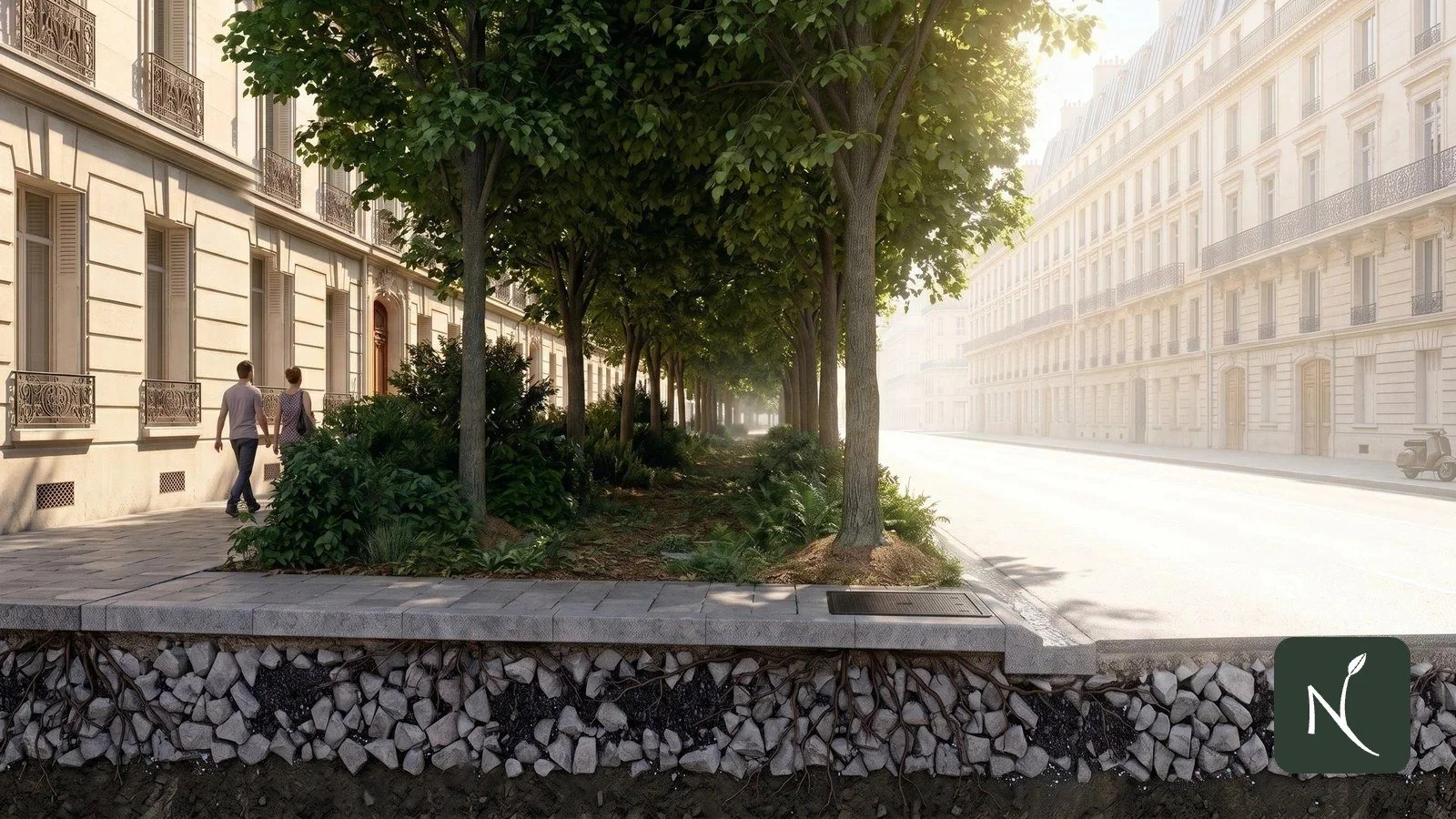
Heat in the city: the solution lies under your trees
Cooling a town with the water it sends down the drain. New plantings, existing trees, roundabouts, facades and buildings on clay: what your departments can do from the very next works.
Chaleur en ville : la solution est sous vos arbres
Rafraîchir une commune avec l’eau qu’elle envoie à l’égout. Nouvelles plantations, arbres existants, ronds-points, façades et bâtiments sur argile : ce que vos services peuvent faire dès le prochain chantier.
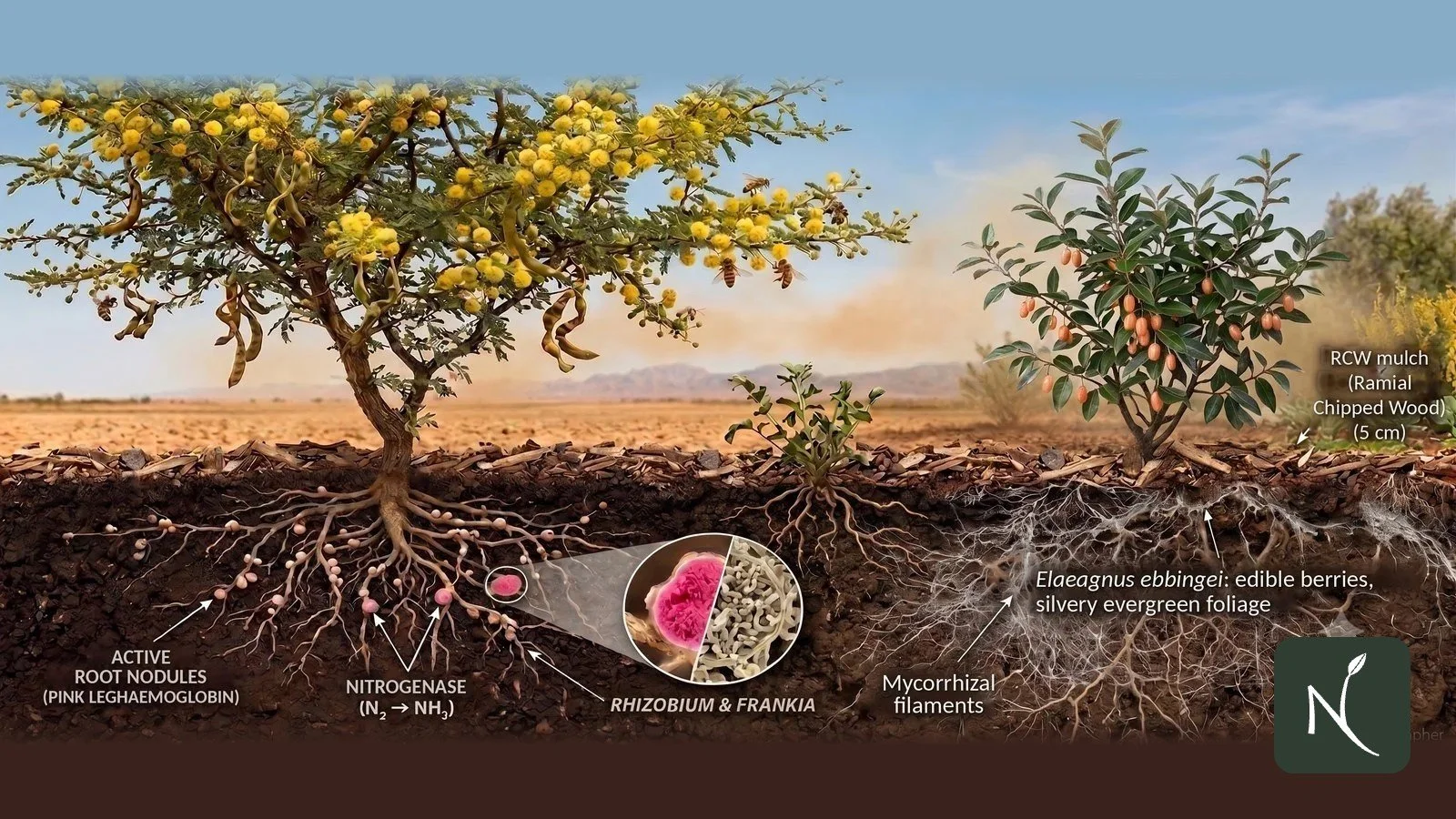
Nitrogen-fixing shrubs: the nitrogen factory you have not planted yet?
Black locust, alder, sea buckthorn, Elaeagnus, acacias: shrubs that make their own nitrogen, feed the soil and give first-class ramial chipped wood, in France as in Morocco.
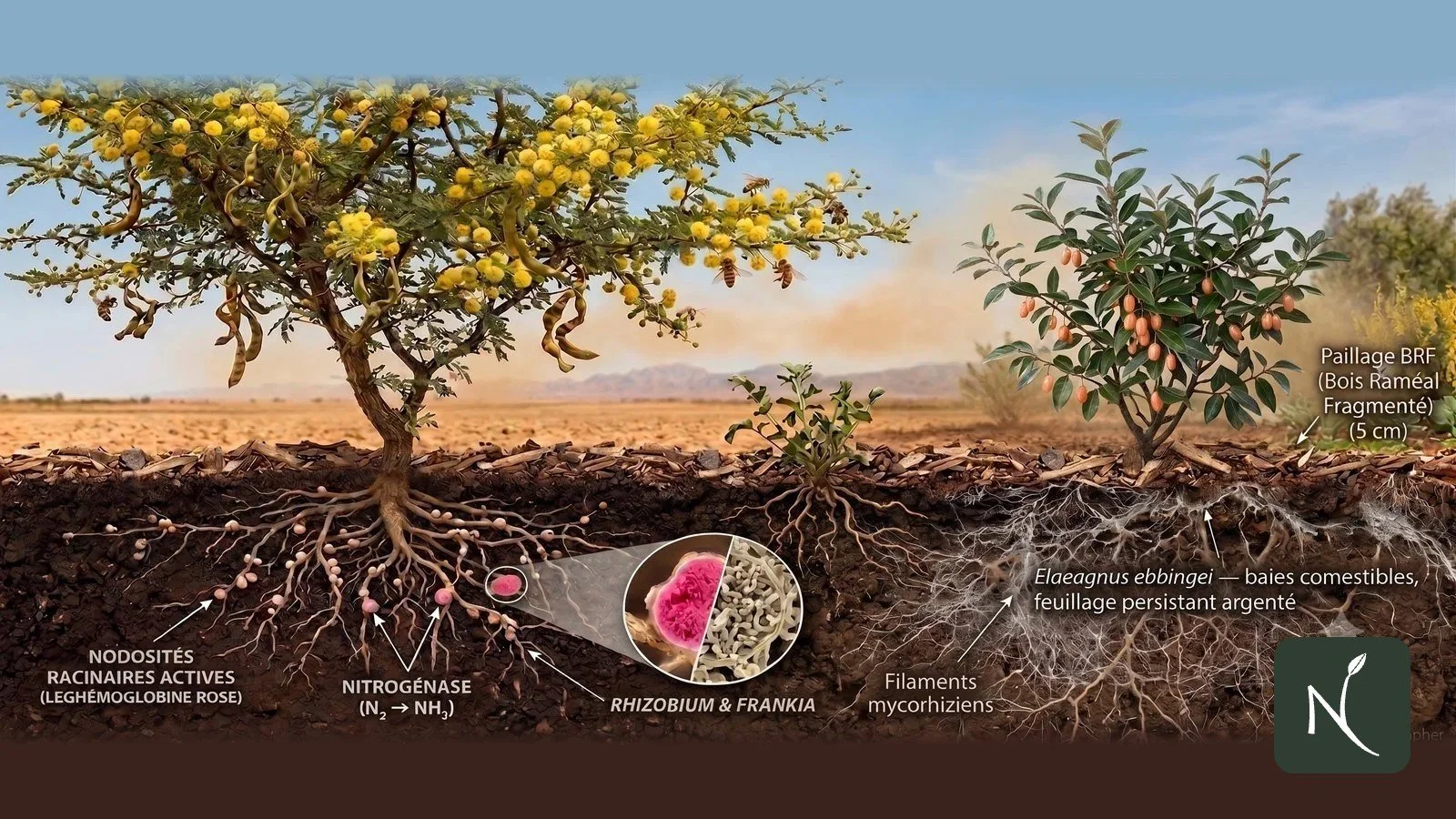
Arbustes fixateurs d’azote : l’usine à azote que vous n’avez pas encore plantée ?
Robinier, Aulne, Argousier, Elaeagnus, Acacias : des arbustes qui fabriquent leur propre azote, nourrissent le sol et donnent un BRF de premier ordre, en France comme au Maroc.
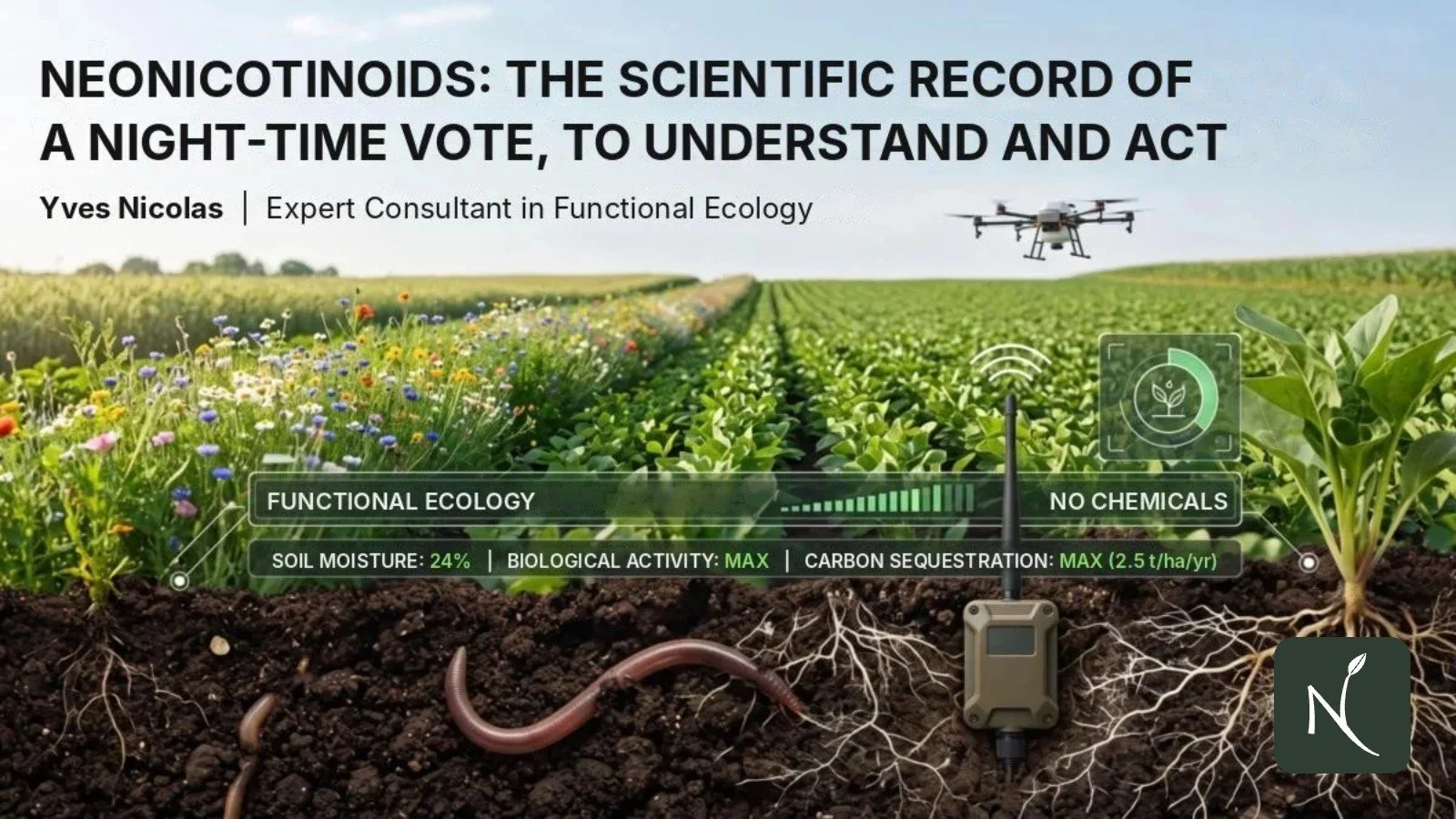
Neonicotinoids: what are they?
An insecticide that travels through the whole plant, right into the nectar, and persists in soils and water. What it does to bees, earthworms and birds, and what ten years of Inrae trials say about the alternatives.
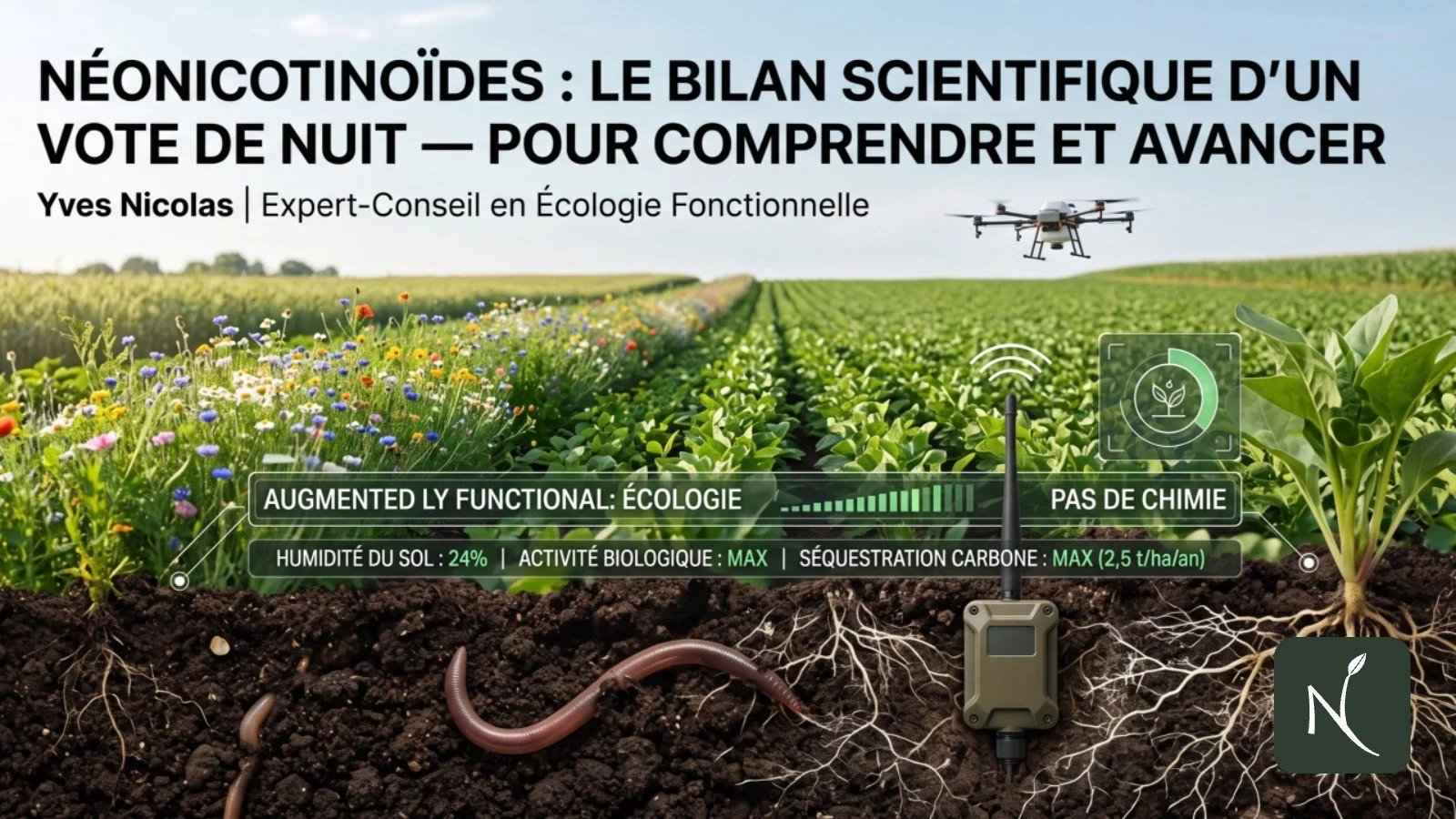
Les néonicotinoïdes, c’est quoi ?
Un insecticide qui voyage dans toute la plante, jusqu’au nectar, et qui persiste dans les sols et les eaux. Ce qu’il fait aux abeilles, aux vers de terre et aux oiseaux, et ce que dix ans d’essais de l’Inrae disent des alternatives.
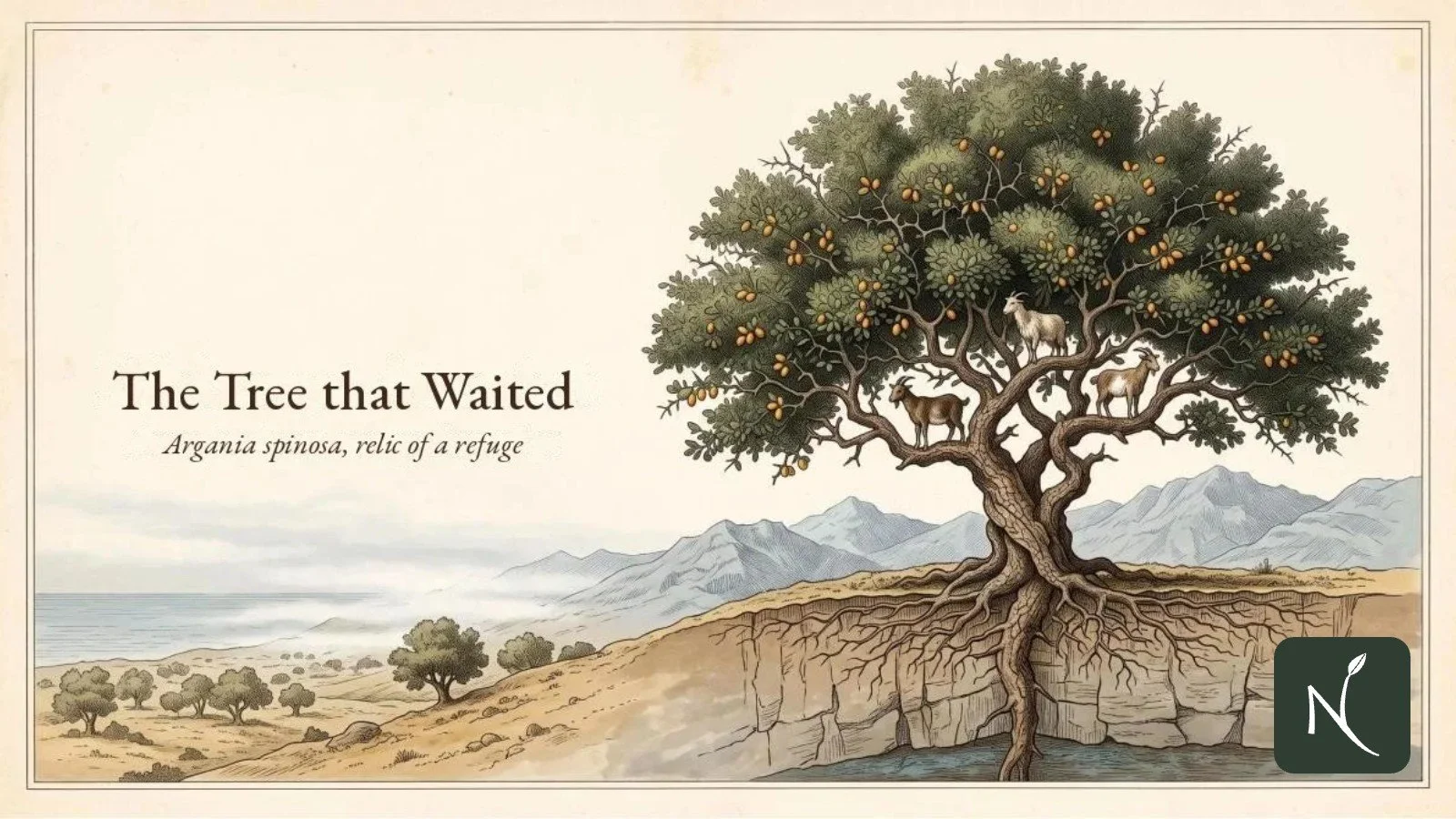
The argan tree, the tree that waited
Millions of years ago, the argan tree's lineage grew on the shores of the Mediterranean. Today it holds on only in a corner of south-western Morocco, where it is still waiting. This article follows Argania spinosa from the Tertiary to the present day: its refuge between the Atlas and the ocean, its alliances with fungi and goats, one hundred and forty thousand years alongside humans, the Arab geographers, the law of the argan woodland and what science really measures in its oil. It ends with a hypothesis to be tested: could the argan be one of the golden fruits of the garden of the Hesperides?
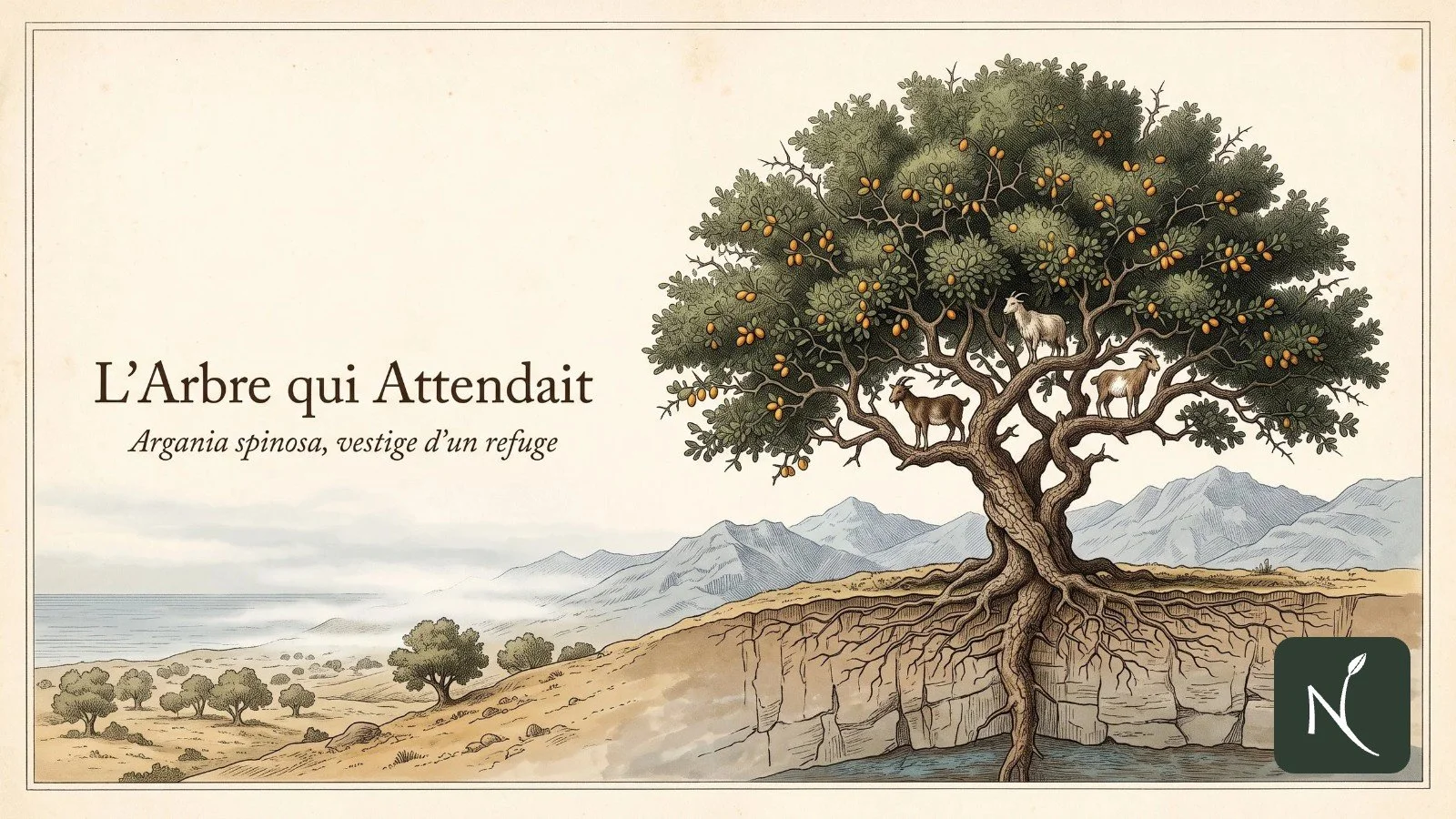
L’Arganier, l’arbre qui attendait
Il y a des millions d’années, la lignée de l’arganier poussait sur les rives de la Méditerranée. Aujourd’hui, il ne tient plus que dans un coin du Sud-Ouest marocain, où il attend encore. Cet article suit Argania spinosa du Tertiaire à nos jours : son refuge entre l’Atlas et l’océan, ses alliances avec les champignons et les chèvres, cent quarante mille ans de vie aux côtés des hommes, les géographes arabes, le droit de l’arganeraie et ce que la science mesure vraiment dans son huile. Il s’achève sur une hypothèse à vérifier : l’arganier pourrait-il être l’un des fruits d’or du jardin des Hespérides ?